Story · The long version
Built on people. Kept by trust.
Eight chapters on how I got here: the habit behind the work, the firm it became, and the relationships that made all of it possible. Trust has been the constant.
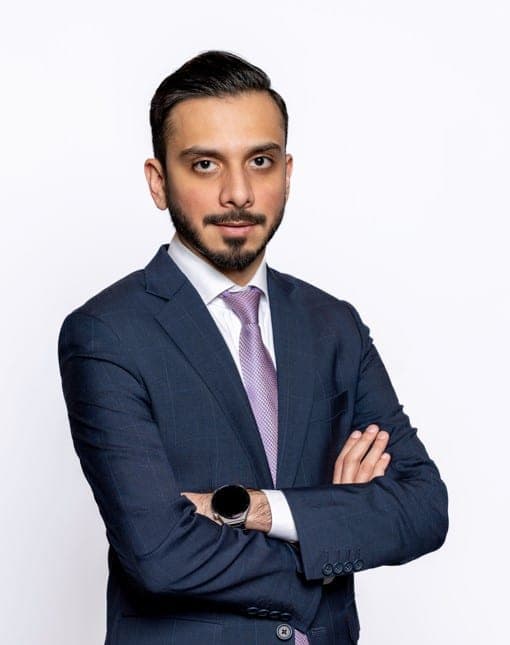
Chapter 01
The honest version starts with a screwdriver.
I grew up in Abu Dhabi, a Middle East kid with Pakistani roots. By grade six I was taking PCs and printers apart to see how they worked, then putting them back together. Sometimes they even worked. My dad never told me to stop. He bought the parts, put up with the mess, and quietly fed an obsession with technology that has never left me. The machines I rebuilt were the same ones I lost hours to playing Counter-Strike. When I wasn't indoors, I was out in the street with a cricket bat.
The engine under all of it was laziness. The productive kind. I'd happily spend a week building something so I never had to spend ten minutes a day on a task I hated. I still would. It's the truest thing I can tell you about how I'm wired.
I was never the textbook student. My marks held up until O levels, then turned volatile. My MBA landed in the upper tier, but I've used very little of it in real life. Most of what I know, I learned by building things, breaking them and building them again, usually to avoid doing them by hand.
Finance turned that habit into a career. At KPMG I built tools so I'd never grind through credit reviews by hand. At Etihad I automated entire inter-station processes and handed the finance team back thousands of hours. At Al Hilal I built an automated risk model so decisions rested on something firmer than opinion. At Emirates I led the tax side through the UAE's first VAT and cut a reporting cycle from 20 business days to 9. Every line of my CV says the same thing: find the dull, repetitive work, then build a way out of it.
And everywhere, I saw the same picture. So much expert work was repetition in an expensive suit. Businesses in the region were either paying Big Four rates for cookie-cutter advice, or going it alone and getting burned by audits. Once I'd seen it, I couldn't unsee it, and I had no intention of solving the same problem one client at a time.
So in 2018 I left the safety of all of it and started Oblique Consult from a coffee shop: a laptop, a stubborn idea about how advisory should be done, and not much else. It grew into a real firm, advising names I once studied as case studies, with a team that genuinely cares about getting it right.
The itch never left. Simpla came from wanting the numbers to carry their own weight. Oblique OS came from wanting my own firm to run itself. Hysaab came from wanting smaller businesses to reach what only the large ones could afford. Ibtidah came from knowing what good finance people look like, and wanting a better way to find them. Each one started the same way: refusing to do something the hard way twice.
People call it drive. Up close, it's a refusal to do by hand what a system could do better. Every one of these began with the same quiet thought: there has to be a better way, and I'd rather build it once than suffer it forever.
Chapter 02
Built to be the first phone call.
I didn't start Oblique to be another firm with a nameplate and a rate card. I started it because I believed advice could be warmer, sharper and far more honest than what most businesses in the region were being sold.
Early on, I decided what we'd be. Not a firm that does things for people, but one that owns their problems as if they were our own.
The difference is real. A task ends when the task ends. Owning a problem means carrying it until it's genuinely solved, and going out of your way, again and again, to get there. That's the standard I wanted us held to.
More than any logo or revenue line, I wanted to be the first phone call: the one you make when something has gone wrong and you're not yet sure what to do. Not because there's a fee at the end of it, but for the simple satisfaction of helping someone who needed it.
Oblique taught me that you build a firm by building people.
Great people serve clients better than any process ever could. So I surrounded myself with people who care, gave them room to grow, and trusted them with real responsibility. The culture was never separate from the strategy. The culture was the strategy.
It also taught me that relationships outlast every engagement. The clients who stayed did so because of how we behaved when things were hard, not when they were easy. Trust is earned quietly, in the difficult moments, and then it compounds for years.
None of it was the highlight reel. There were months when payroll was a question and nights that ran far too long. What I'm proudest of is the decision, made over and over, to keep building and keep showing up for people. What began in a coffee shop now works across the Gulf, alongside people I'd trust with anything. That part still quietly surprises me.
Chapter 03
Nobody builds anything alone.
If I believe one thing without reservation, it's this. Everything I've made rests on an ecosystem of people: family who grounded me, friends who carried me, mentors who corrected me, bosses who backed me, and clients who somewhere along the way became part of the team.
I've been one of the fortunate few to land genuinely great bosses, then watch them become greater mentors, and greater still, some of my dearest friends. They handed me responsibility before I'd earned it, corrected me kindly when I got it wrong, and opened doors they could just as easily have kept shut.
I've been just as lucky with clients. The best of them grew us not only by trusting us with their work, but by coaching us, challenging us and giving us the honest feedback that made us sharper. Some of the most important lessons in building Oblique came from the very people we were there to serve.
- My mentors
- Buland Iqbal · Muhammad Nabeel · Manzoor Qureshi · Qazim Sumar · Farrukh Khan · Anoop Kumar · Hisham Farouk
- My brothers, for their wisdom and their part in my professional life
- Nabeel Siddiqui · Danial Hashmi · Adeel Hashmi · Jamal Hashmi · Saad Zafar
- My dearest friends
- Haider, who taught me nearly everything I know today · Shahid · Matthew · Badr Ward, who continues to patiently teach me the moves of the startup world · and countless others I can't name here
But the people I owe the most to are closer to home.
Chapter 04
The people I come home to.
- My father, who handed a restless kid a screwdriver and never once told him to stop.
- My mother, who taught me what warmth and patience actually look like.
- Anam, my best friend and my partner, who makes all the building worth coming home from.
- And my little wingman, Yousuf, the reason I now think in decades instead of quarters.
Chapter 05
I want to be remembered well.
For me, ambition has never been about the size of what I build. It's about the size of the dent I leave in the places that matter.
By my family first. Whatever I build out there, the truest measure is whether the people closest to me felt loved, present and proud along the way. The work means little if they don't feel it was worth it.
I want to change my industry, then reach past it. Good advice shouldn't stay a privilege of the few who can afford it. If I can make the best thinking cheaper, faster and fairer, that's a life well spent.
I want to build bootcamps in the places that get overlooked, the towns and neighbourhoods where talent is everywhere and access is nowhere, so a kid with no runway can pick up the knowledge that changes a life. PassDrill, free exam practice for anyone with a connection, is a small first step.
I want to leave a real mark on the place and the people that made me. So much of what I have came from being in the right rooms, with the right people and the right ideas. I want to hand that same exposure to those who never got the access, or the start, I was lucky enough to get.
I believe we owe this world something in return: to give back, to contribute, to leave the place a little better than we found it. That, in the end, is the truest test of a life.
And when it's all counted, long after the deals and the dashboards, I'd like to be someone people remember fondly. Warm, generous, worth having known. It's the only metric that never lies.
Chapter 06
Nowhere near finished.
I've never been good at predicting the future, and I've stopped pretending otherwise. What I do know is the direction, and that I'm nowhere near finished.
There's a lot more to learn. The work I do now barely existed a few years ago, and the work of a few years from now is still being invented. I want to be in the room while it is.
There's a lot more to build and deliver. More systems that give people their hours back, more good thinking within reach of those priced out of it, and more promises kept to the clients and the team who trusted me early.
There are more relationships to make. The best parts of the story so far have all been people, and I expect the chapters ahead to be the same.
And there are many more people to help. That's been the quiet engine under all of it, and it always will be.
So I'll keep learning, keep building and keep showing up. The rest, I'm glad to find out as I go.
Chapter 07
Five books, five builders.
What I read, and who I look to.
- Straight from the GutJack WelchHow a hard-nosed operator actually thinks about people and decisions.
- Zero to OnePeter ThielOn building things that didn't exist the day before.
- The Ride of a LifetimeBob IgerLeadership, decency and nerve, from inside one of the great runs at Disney.
- Shoe DogPhil KnightThe most honest founder memoir I know, and the closest to how it really feels.
- Thinking, Fast and SlowDaniel KahnemanWhy good judgement is harder, and rarer, than it looks.
And I'm drawn to builders who measured success by far more than money.
- Ratan TataBuilt a group much of which is owned by charitable trusts, and stayed humble through all of it.
- Abdul Sattar EdhiBuilt Pakistan's largest humanitarian network from almost nothing, and lived with almost nothing himself.
- Azim PremjiGave away the bulk of a technology fortune, most of it aimed at schooling the children who had the least.
- Sal KhanPut a genuinely good education within reach of anyone with a connection, for free.
- Yvon ChouinardHanded Patagonia to the planet rather than cash out, so the profits fight for the environment.
Chapter 08
Off the clock.
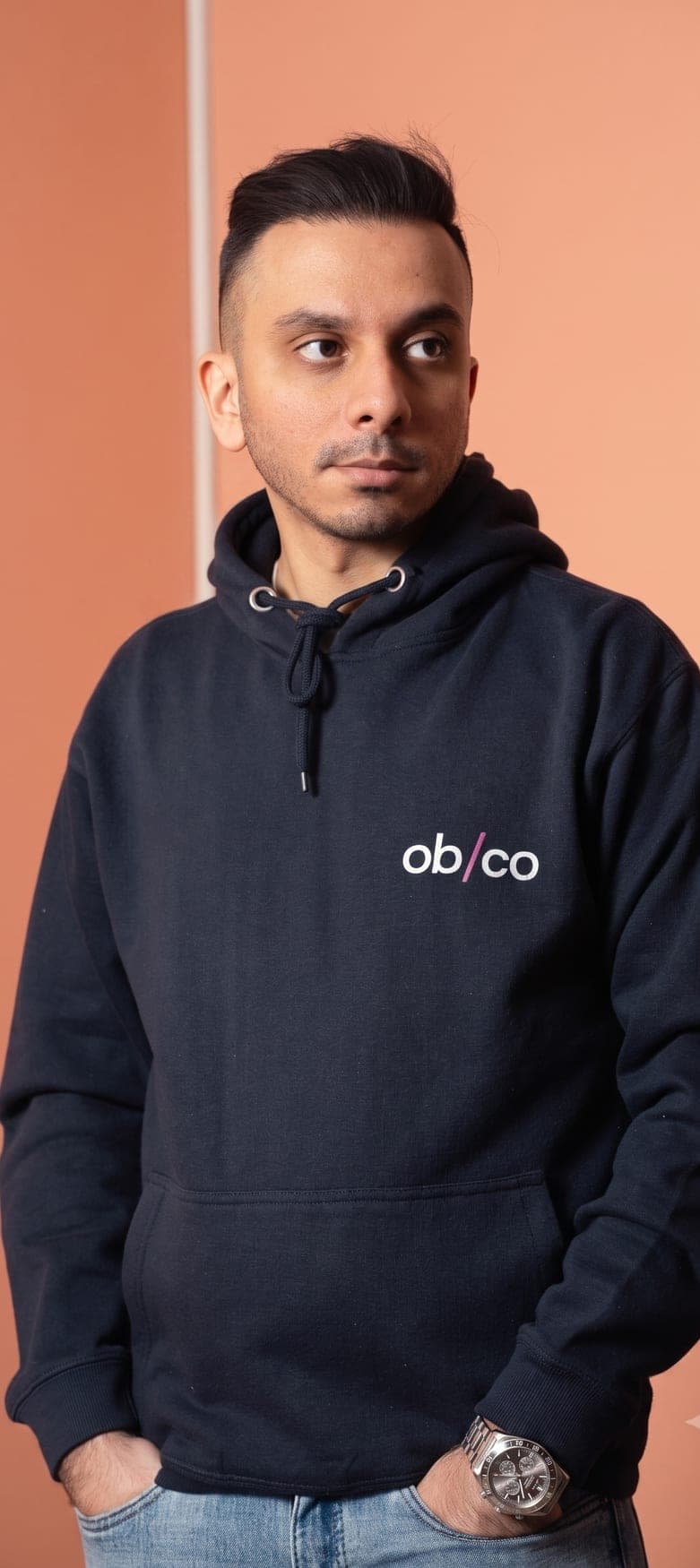
The rest of me, away from the work.
- Aviation
- Years inside the airline world never wore it off. I still look up every single time.
- Reading
- Current affairs and technology, mostly. The world moves quickly and I like keeping pace with it.
- My feed for the unfiltered version of almost everything.
- Shisha
- How a good conversation learns to slow down.
- Markets
- I trade options for the sport of it, my own money on the line, the numbers never far away.
In clients’ words
Said better by others.
He always has a solution. Under real pressure, on the work that actually matters, he is the calm and patient head in the room. He solves the problem first and talks commercials later, and in a world that keeps getting more commercial, that was deeply refreshing.
Working with him showed us how far behind we had fallen. When nobody believed accounting and tax could be augmented with AI, he simply went and delivered it.
When COVID hit and we had to pause, he told us the scope would not change, only the timelines, and that he would still deliver. He did. Every business of ours has been advised by him ever since, and only ever will be. Very few people prove, through what they do, that they stand with you shoulder to shoulder.
Principles
Six I don’t trade.
- The best advisors are also builders.
- Technology is leverage for human judgement.
- Relationships are everything. Nothing lasting is built alone.
- Trust compounds. It's the only asset that always does.
- Knowledge should reach the people who were never given access to it.
- Precision is a form of respect.